Glossary
The CloudLabs Glossary
Clear, practical definitions of the terms that matter in virtual labs, hands-on training, sales enablement, and cloud learning.
All terms
11 terms
-
 Sales enablement
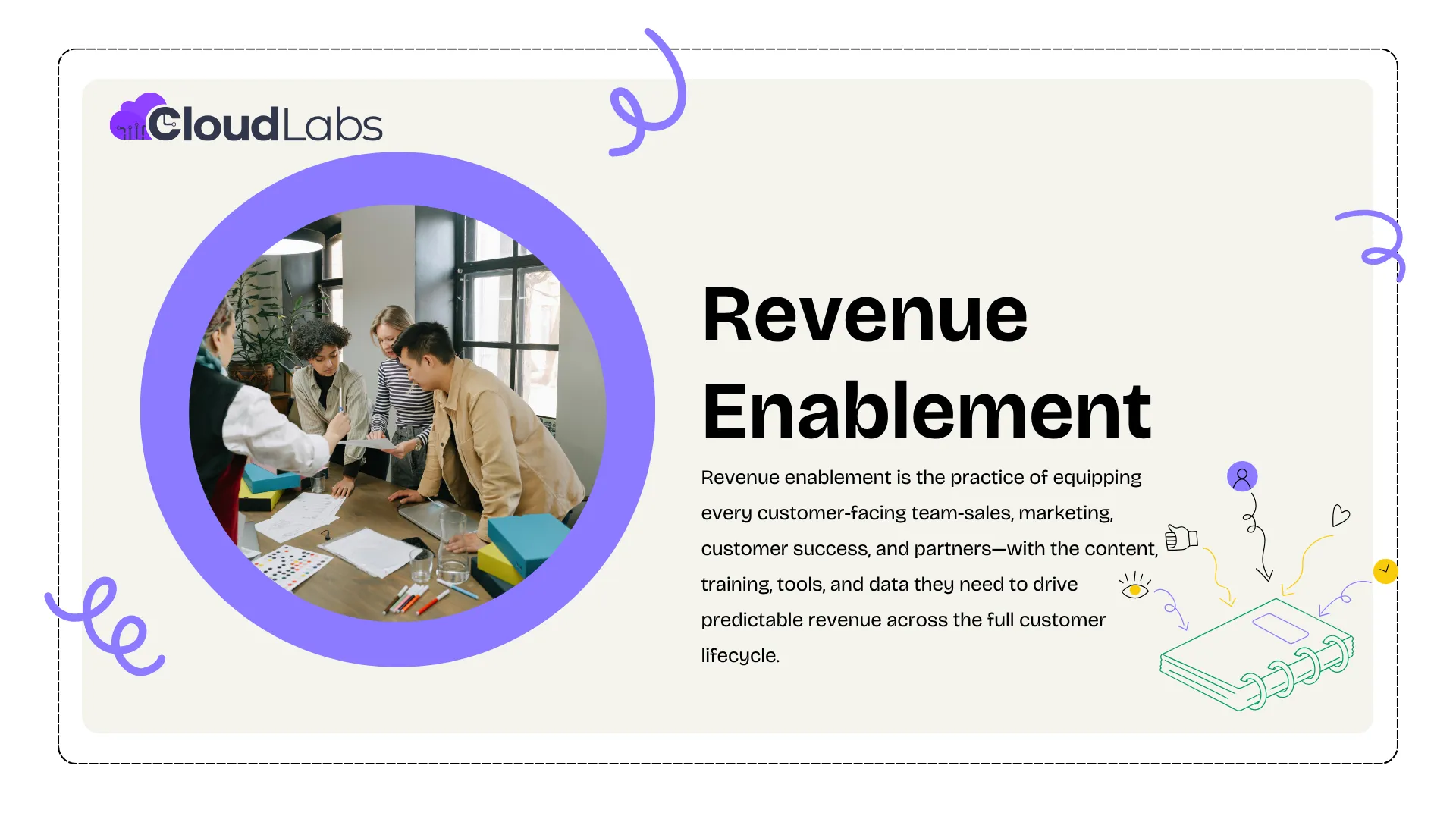
Revenue Enablement
Revenue enablement is the practice of equipping every customer-facing team — sales, marketing, customer success, and partners — with the content, training, tools, and data they need to drive predictable revenue across the full customer lifecycle.
-
What is a Customer Academy?
A customer academy is a structured learning environment designed to teach customers how to use a product or service effectively and maximize the value they derive from it. Often delivered as a digital platform, a customer training academy centralizes courses, hands-on labs, assessments, and certifications, and is typically branded to match the vendor's product experience.
-

What is a Cyber Range?
A cyber range is a controlled, virtual environment that simulates real-world networks, systems, and cyber threats so security teams can practice offensive and defensive skills under realistic conditions. Cyber ranges are used for team training, incident response rehearsals, certification, and red-versus-blue team exercises and are isolated from production systems so realistic attacks and tools can be used safely.
-

What is a Cybersecurity Lab?
A cybersecurity lab is an isolated environment that simulates real systems, networks, and threats so security teams, students, and certification candidates can practise offensive and defensive skills safely. It typically includes vulnerable target machines, attack tools, monitoring systems, and structured exercises.
-
What is a Sales Demo Environment? Definition & Components
A sales demo environment is a dedicated, pre-configured product instance used to run live demonstrations. Learn the 5 components, types, and best practices.
-
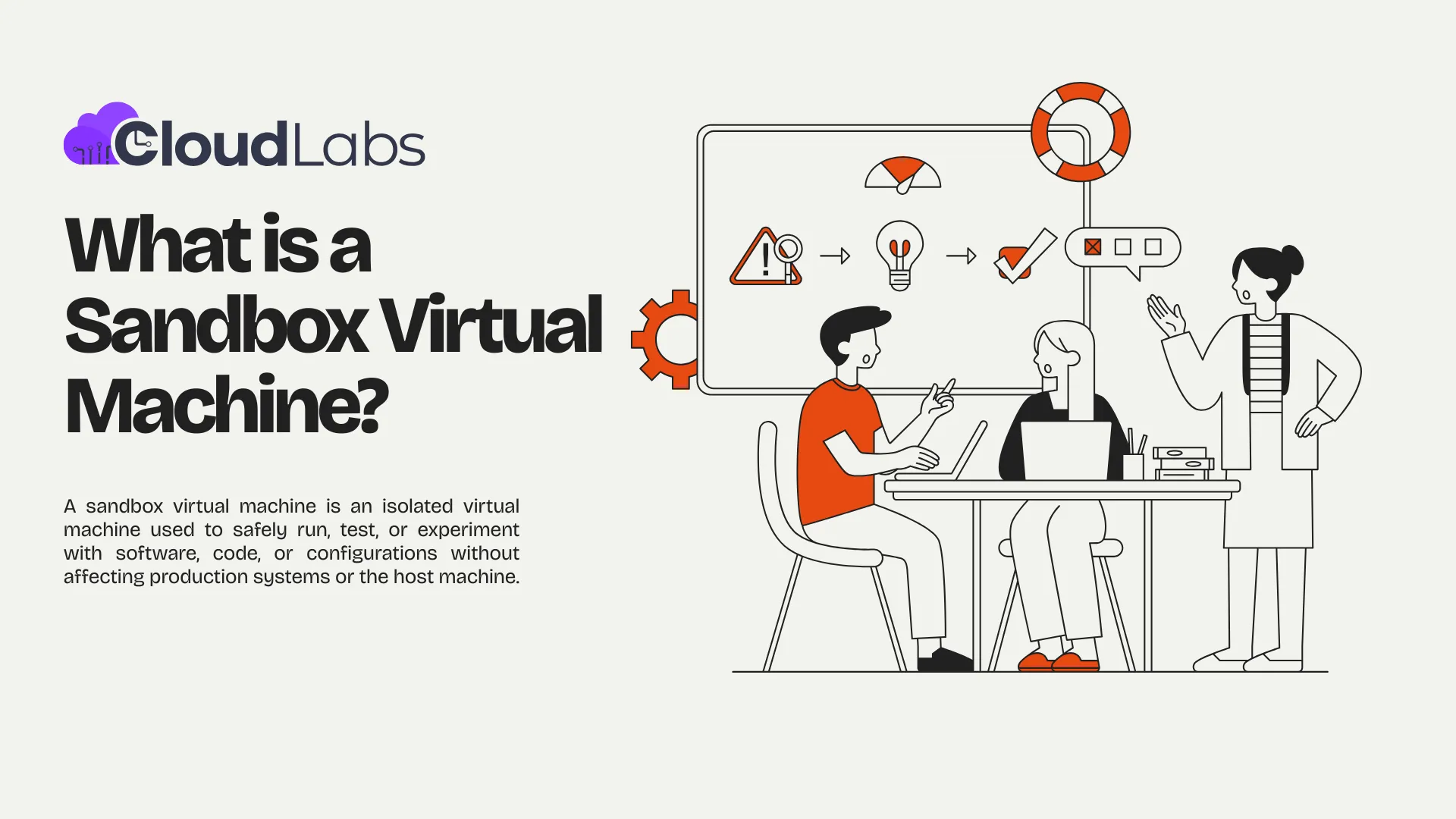
What is a Sandbox Virtual Machine?
A sandbox virtual machine is an isolated virtual machine used to safely run, test, or experiment with software, code, or configurations without affecting production systems or the host machine. Sandbox VMs are disposable, can be reset on demand, and are widely used in development, security testing, malware analysis, and hands-on training.
-
What is a Test Environment?
A test environment is a controlled, isolated setup that mirrors a production system closely enough to validate that software behaves correctly before it is released. It includes the application, supporting services, test data, and infrastructure configured to enable repeatable testing without risk to live users.
-
 Customer enablement
What is Customer Enablement?
Customer enablement is the structured set of training, resources, and hands-on experiences a company provides to help its customers learn, adopt, and get measurable value from its product. Done well, it turns new users into power users, lowers churn, and creates internal champions who renew and expand the account.
-
 Sales enablement
What is Proof of Concept (POC)?
A proof of concept (POC) is a structured, time-boxed evaluation in which a prospective buyer tests a software product in a real environment to verify it can solve a specific business problem. Unlike a demo, a POC is hands-on and outcome-driven. It produces evidence rather than impressions, and is one of the most influential steps in modern enterprise software buying.
-

What is Self-Paced Learning?
Self-paced learning is an educational approach in which learners progress through course material on their own schedule, without a fixed class meeting time. It typically combines pre-recorded content, reading material, hands-on exercises, and assessments delivered through an online platform, with learners choosing when and how quickly to complete each section.
-
What is Virtual Instructor-Led Training (VILT)?
Virtual instructor-led training (VILT) is live, online training delivered by an instructor to remote learners through a virtual classroom platform. It combines real-time teaching with screen sharing, polls, breakout rooms, and often hands-on labs, replicating the structure of in-person training without the travel.
No terms match that yet.